How Cocktail Culture Is Transforming The Global Liqueur Market Through 2032

Key Highlights
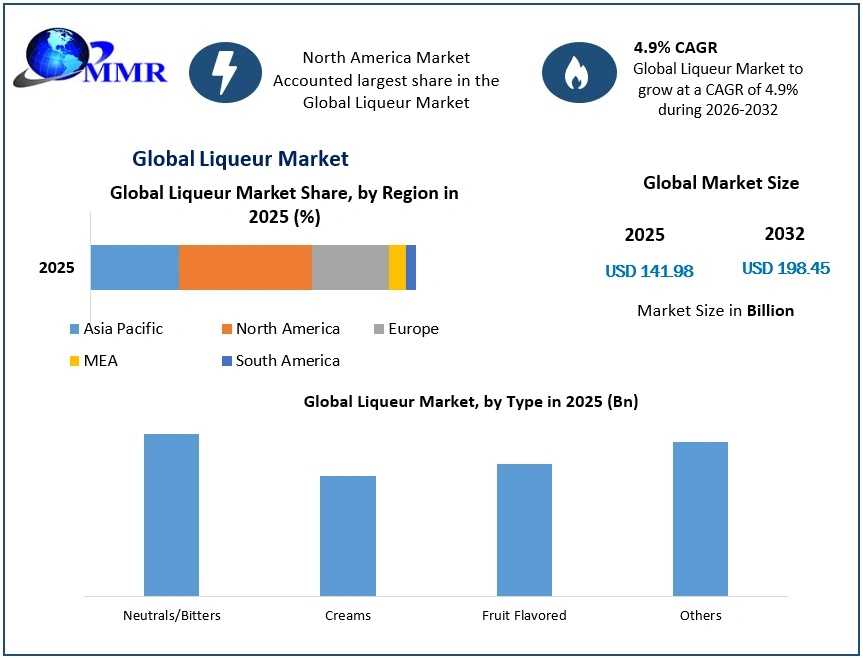
- Global market valued at USD 141.98 Billion in 2025.
- Market expected to reach USD 198.45 Billion by 2032.
- Forecast CAGR stands at 4.9% during 2026–2032.
- Europe remains the leading production and consumption hub.
- Premiumization continues to increase average selling prices.
- Craft liqueurs are creating opportunities for smaller producers.
- Health-conscious consumers are accelerating demand for reduced-sugar and lower-alcohol products.
- Glass bottles remain the preferred packaging format.
- Online retail is improving product accessibility across mature and emerging markets.
- Asia-Pacific is becoming a key growth engine for imported premium brands.
Why This Matters Now
The global spirits industry is shifting from volume-driven sales toward premium value creation. Consumers increasingly seek distinctive flavors, artisanal production methods and premium drinking experiences instead of standard alcoholic beverages. At the same time, digital retail channels, evolving cocktail culture and rising disposable incomes are expanding the addressable consumer base. Companies capable of balancing premium innovation with health-conscious product development are positioned to strengthen pricing power while capturing demand across both mature and emerging markets.
Market Overview
The liqueur market represents the flavored and sweetened spirits segment of the alcoholic beverage industry. Products are manufactured by blending distilled spirits with fruits, herbs, spices, cream or coffee, creating a wide portfolio that serves both direct consumption and cocktail applications.
Demand continues to expand as premium spirits gain wider consumer acceptance. Growing interest in mixology has increased the importance of liqueurs as essential cocktail ingredients across bars, restaurants and home consumption.
Supply remains supported by established European producers, while international brands continue expanding distribution through supermarkets, liquor stores, specialty retailers, duty-free outlets and online channels. This broader availability has improved market penetration beyond traditional consumption regions.
Several macroeconomic factors continue shaping industry performance. Rising disposable income supports premium product purchases, urbanization expands modern retail infrastructure and tourism stimulates demand across hospitality channels. However, regulatory compliance, alcohol taxation and supply chain volatility remain critical operational considerations for manufacturers.
Key Trends Driving Growth
Premiumization Drives Higher Value Sales
Consumers increasingly prioritize product quality over quantity. Premium and ultra-premium liqueurs command higher margins through distinctive flavors, premium ingredients and strong brand positioning. This trend enables manufacturers to improve profitability without relying solely on higher production volumes.
Craft Production Gains Commercial Importance
Small-batch producers continue attracting consumers seeking authenticity and regional heritage. Craft positioning creates differentiation in an increasingly competitive marketplace while allowing smaller brands to compete through innovation rather than scale.
Health-Conscious Innovation Expands Product Portfolio
Manufacturers are introducing lower-sugar, lower-calorie and reduced-alcohol variants to align with changing consumer preferences. These products help brands retain existing customers while expanding appeal among health-conscious buyers.
Sustainability Influences Brand Selection
Consumers increasingly evaluate environmental credentials alongside product quality. Sustainable sourcing, recyclable packaging and responsible production practices are becoming competitive differentiators rather than optional brand attributes.
Retail Digitalization Improves Accessibility
Online alcohol retail continues expanding market reach by improving product discovery and consumer convenience. Digital commerce also allows premium brands to target niche customer segments more efficiently.
Regulatory Complexity Shapes Market Competition
Alcohol taxation, labeling standards and licensing regulations differ significantly across regions. Larger multinational companies maintain competitive advantages through established compliance capabilities and extensive distribution networks.
Explore detailed analysis, insights, and growth opportunities : https://www.maximizemarketresearch.com/request-sample/199850/
Segment Insights
Dominant Segment: Glass Packaging
Glass accounted for the largest market share in 2025 due to its superior product preservation characteristics and premium consumer perception.
Glass protects flavor integrity by preventing oxygen exposure while maintaining product quality during storage. Premium packaging also reinforces brand positioning, particularly for luxury and craft liqueurs where visual presentation directly influences purchasing decisions.
From a business perspective, continued preference for glass supports premium pricing strategies and strengthens brand differentiation in highly competitive retail environments.
Fastest-Growing Segment: Online Retail Distribution
Online retail is emerging as the fastest-growing distribution channel as consumers increasingly purchase alcoholic beverages through digital platforms.
Digital sales improve product availability beyond traditional liquor stores while enabling manufacturers to reach consumers directly through targeted marketing and personalized recommendations. This channel also supports premium product discovery and enhances customer engagement.
For producers, online retail reduces geographic limitations and creates new opportunities for premium portfolio expansion.
Additional Key Sub-Segments
Fruit-Flavored Liqueurs
Fruit-based products continue attracting broad consumer interest due to their versatility in cocktails and approachable flavor profiles. Their popularity supports innovation across seasonal and premium product launches.
Cream Liqueurs
Cream liqueurs maintain strong demand through premium gifting occasions, dessert beverages and specialty cocktails. Established brands continue benefiting from high customer loyalty.
Bars and Restaurants
Hospitality remains a critical consumption channel as cocktail culture expands globally. Growth in premium cocktail menus directly increases demand for specialized liqueur ingredients.
Duty-Free and Specialty Stores
Travel retail and specialty beverage outlets continue supporting premium international brands by targeting affluent consumers seeking exclusive product offerings.
Regional Growth Story
North America
The United States remains the primary regional demand center, supported by strong cocktail culture and increasing consumer interest in premium spirits. Craft beverage innovation continues strengthening market diversity while digital retail expands accessibility.
Europe
Europe maintains market leadership through its long-established production heritage and globally recognized brands. France, Italy and Germany continue serving as both major manufacturing hubs and significant consumption markets. Premium and organic product innovation further strengthens regional competitiveness.
Asia-Pacific
Asia-Pacific represents the fastest evolving demand landscape. Rising disposable income, urbanization and changing consumer lifestyles are increasing purchases of imported and premium liqueurs across China, Japan, South Korea and India. International manufacturers continue prioritizing regional expansion through distribution investments.
South America, Middle East and Africa
Emerging markets continue benefiting from expanding tourism and evolving consumer preferences. Traditional local liqueurs remain important while flavored products and cocktail ingredients gain wider commercial acceptance across urban markets.
Competitive Landscape
The market remains moderately consolidated, with multinational beverage companies leveraging extensive distribution networks, diversified brand portfolios and premium positioning to maintain competitive leadership.
Diageo, Pernod Ricard, Campari Group, Brown-Forman Corporation and Rémy Cointreau continue strengthening market positions through portfolio diversification, premium brand development and broad international distribution.
Established companies benefit from significant marketing resources, regulatory expertise and global retail relationships, creating high barriers for new entrants. Meanwhile, regional and craft producers compete through differentiated flavors, localized branding and artisanal production methods rather than production scale.
Strategic partnerships with distributors and hospitality operators remain essential for expanding retail presence and improving market penetration. Continued investment in research and development enables manufacturers to introduce innovative flavors while responding quickly to evolving consumer preferences.
Recent Developments
- Premium and craft liqueur portfolios continue expanding to address growing consumer demand for artisanal products.
- Manufacturers are introducing lower-sugar and reduced-alcohol variants to align with health-conscious purchasing behavior.
- Online retail distribution continues expanding product accessibility across established and emerging markets.
- Producers are increasing investment in sustainable packaging and responsible sourcing initiatives.
- Companies continue strengthening distribution partnerships to improve international market penetration.
Future Outlook
Companies that combine premium brand positioning, continuous flavor innovation, digital distribution expansion and health-focused product development will capture the greatest long-term competitive advantage as consumer preferences continue shifting toward higher-value spirits.
About Maximize Market Research
Maximize Market Research Pvt. Ltd. (MMR) is a global market research and consulting company that provides reliable, data-focused, and practical business insights. The firm serves a wide range of industries, including healthcare, pharmaceuticals, technology, automotive, electronics, chemicals, personal care, and consumer goods. Through market forecasts, competitive analysis, strategic consulting, and industry impact assessments, MMR helps organizations understand changing market conditions, identify growth opportunities, and make informed business decisions for long-term success.
Contact Us :
2nd Floor, Navale IT Park Phase 3
Pune Banglore Highway, Narhe
Pune, Maharashtra 411041, India
+91 9607365656
sales@maximizemarketresearch.com
Author Bio
Article Comments
No Comments!
At present there are zero comments on this article.
Why not be the first to make a comment?
Similar Articles
Search Pages
User Upgrade
account to full use of editor,
Including hyperlinks
Article Categories
There are zero sub-categories in this parent category.
There are zero sub-categories in this parent category.