Dark Store Market To Expand At 38.7% CAGR By 2034

Dark Store Market Overview
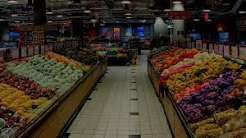
The global Dark Store Market is witnessing significant growth as consumers increasingly prefer online shopping, quick-commerce platforms, and convenient home delivery services. Dark stores are specialized retail facilities or distribution centers designed exclusively to fulfill online orders rather than serve walk-in customers. These facilities help retailers manage inventory efficiently, process orders faster, and improve last-mile delivery operations.
The global Dark Store Market was valued at USD 112.40 million in 2025 and is expected to reach approximately USD 2,135.32 million by 2034, growing at a CAGR of 38.7% during the forecast period 2026–2034. The growing adoption of e-commerce, increasing demand for rapid grocery delivery, and expansion of quick-commerce businesses are supporting market growth.
Dark stores operate as small urban fulfillment centers or large automated warehouses. They store products such as groceries, food, electronics, apparel, household goods, and pharmaceutical products. By positioning inventory closer to customers, businesses can reduce delivery times, improve order accuracy, and optimize distribution costs.
Request for a Free Sample of This Strategic Report ➤ https://www.maximizemarketresearch.com/request-sample/193930/
Dark Store Market Dynamics
Market Drivers
Growing E-commerce and Online Shopping Adoption
The increasing popularity of online shopping is one of the major factors driving the dark store market. Consumers are increasingly purchasing groceries, household essentials, electronics, and personal care products through digital platforms. Retailers are establishing dedicated fulfillment centers to manage rising online orders and provide faster delivery services.
Rapid urbanization, changing lifestyles, and growing smartphone penetration are further encouraging consumers to adopt online shopping. Dark stores help retailers meet these expectations through efficient inventory management and streamlined order processing.
Increasing Demand for Quick Commerce and Same-Day Delivery
The growing popularity of quick-commerce services is creating substantial demand for dark stores. Consumers increasingly expect groceries and essential products to be delivered within shorter timeframes. Dark stores located in densely populated urban areas allow businesses to fulfill orders quickly and improve customer satisfaction.
Market Restraints
High Initial Investment and Operational Costs
Establishing dark stores requires considerable investment in warehouse infrastructure, inventory management systems, automation technologies, and logistics operations. Maintaining multiple facilities in urban locations can increase rental, labor, transportation, and utility expenses.
Managing perishable products also creates operational challenges, as retailers must maintain appropriate storage conditions, monitor product expiration dates, and ensure product quality during delivery.
Market Opportunities
Partnerships Between Retailers and Technology Companies
Strategic partnerships between traditional retailers, e-commerce platforms, logistics providers, and technology companies are creating new growth opportunities. These collaborations help businesses improve order management, optimize inventory distribution, and expand delivery networks.
The integration of automated picking systems, artificial intelligence, and advanced warehouse management software can further improve dark store productivity.
Market Challenges
Inventory Management and Last-Mile Delivery Complexity
Managing inventory across multiple dark store locations remains a significant challenge. Businesses must maintain adequate stock levels while minimizing overstocking, product wastage, and stockouts.
Last-mile delivery costs, traffic congestion, labor shortages, and regulatory restrictions on warehouse locations can also affect operational efficiency and profitability.
Dark Store Market Trends
Automation and Smart Warehouse Technologies
Retailers are increasingly adopting automated storage systems, barcode scanning, robotics, and artificial intelligence to improve warehouse operations. These technologies help reduce manual errors, accelerate order picking, and increase operational efficiency.
Expansion of Hyperlocal Fulfillment Networks
Quick-commerce companies are expanding their networks of smaller fulfillment centers near residential areas. This strategy enables faster deliveries and helps businesses serve customers across densely populated urban markets.
Growing Demand for Online Grocery Delivery
Online grocery shopping continues to create opportunities for dark store operators. Consumers prefer convenient access to fresh food, packaged groceries, beverages, and household essentials through digital platforms.
Dark Store Market Segment Analysis
The market is segmented based on service type, product, delivery options, operational scale, and region.
By Service Type, the market is divided into Business-to-Business (B2B) and Business-to-Consumer (B2C). The B2C segment benefits from increasing consumer adoption of online shopping platforms and demand for convenient home delivery. B2B dark stores also support retailers, wholesalers, restaurants, and other businesses through efficient inventory distribution.
By Product, the market includes apparel, electronics, food, grocery, household goods, and pharmacy products. The grocery and food categories benefit from increasing online grocery purchases and demand for quick delivery of everyday essentials. Electronics, apparel, and pharmaceutical products also contribute to market expansion.
By Delivery Options, the market is categorized into curbside pickup, home delivery, and in-store pickup. Home delivery dominated the market in 2025 due to its convenience and ability to provide products directly to consumers. Curbside pickup is also gaining popularity by offering convenient order collection without requiring customers to enter retail facilities.
By Operational Scale, the market is divided into small independent stores and larger chains or franchises. Larger chains benefit from established distribution networks, greater investment capacity, and advanced inventory management systems.
Dark Store Market Regional Analysis
North America and Europe dominate the global dark store market due to their established e-commerce infrastructure, strong digital retail ecosystems, and presence of major industry participants.
North America represents a leading regional market, supported by the growing adoption of online grocery shopping, advanced logistics infrastructure, and investments by companies such as Amazon and Walmart. Retailers are increasingly developing dedicated fulfillment facilities to improve delivery efficiency.
Europe is experiencing considerable market growth due to increasing online grocery purchases and investments in automated fulfillment centers. The United Kingdom, Germany, and France are important markets, with companies such as Ocado focusing on technology-driven grocery fulfillment operations.
Asia Pacific offers significant growth opportunities due to rapid urbanization, increasing internet penetration, rising disposable incomes, and expanding e-commerce activities. Countries such as China, India, and Japan are witnessing growing demand for quick-commerce services and online grocery delivery. The expansion of companies such as JD.com and Flipkart is supporting regional market development.
South America and the Middle East & Africa are emerging markets as digital shopping adoption increases and retailers invest in modern logistics infrastructure. Growing urban populations and demand for convenient delivery services are expected to create additional opportunities.
Dark Store Market Competitive Landscape
The global dark store market is highly competitive, with established retailers, e-commerce companies, and quick-commerce service providers investing in fulfillment infrastructure and advanced technologies. Companies are focusing on network expansion, warehouse automation, strategic partnerships, and improvements in last-mile delivery capabilities.
Major players operating in the market include:
Albertsons
Amazon.com, Inc.
Auchan
DoorDash
Dunzo Daily
Flipkart
FreshDirect
Grab
Instacart
JD.com
Kroger
Ocado
Ola Foods
Swiggy
Target Brands, Inc.
Tesco
Uber
Walmart, Inc.
Wolt
These companies are strengthening their competitive positions through investments in digital platforms, automated inventory systems, and hyperlocal distribution networks.
Request for a Free Sample of This Strategic Report ➤ https://www.maximizemarketresearch.com/request-sample/193930/
Recent Developments in the Dark Store Market
- June 15, 2025 – BigBasket: BigBasket announced plans to expand its quick food delivery operations by scaling its proprietary dark store network to strengthen hyperlocal delivery coverage and same-day fulfillment capabilities.
- April 12, 2026 – Flipkart: Flipkart expanded its quick-commerce operations through Flipkart Minutes by establishing high-density dark store locations to support faster deliveries.
- April 20, 2026 – Shadowfax Technologies: Shadowfax introduced a strategic capital allocation framework focused on expanding dark store and quick-commerce logistics hubs to improve last-mile delivery efficiency.
Conclusion
The global dark store market is expected to experience substantial growth through 2034, driven by increasing e-commerce penetration, quick-commerce expansion, and rising consumer demand for faster delivery services. Retailers are investing in automated fulfillment facilities, advanced inventory management systems, and hyperlocal distribution networks to improve operational efficiency.
North America and Europe currently hold strong market positions, while Asia Pacific is emerging as an important growth region due to expanding digital retail ecosystems in China, India, and Japan. Technological advancements, strategic partnerships, and investments in last-mile logistics are expected to create significant opportunities for market participants during the forecast period.
Author Bio
Article Comments
No Comments!
At present there are zero published comments on this article.
Similar Articles
Search Pages
Article Categories
There are zero sub-categories in this parent category.
There are zero sub-categories in this parent category.