The 2027 Web Design & SEO Blueprint: How To Build Sites That Rank And Convert

A website that ranks well but fails to generate enquiries is only half a marketing asset. In 2027, successful business sites combine crawlable technical foundations, intent-led content, fast mobile experiences, and conversion paths that make the next action obvious.
Start with Search Intent
Do not begin with a design template or a list of services. Begin with the questions your ideal customers search before they are ready to buy.
Group searches by intent: informational, comparison, and commercial. For example, “how much does a website cost” needs transparent pricing guidance, while “web design agency in UK” needs a service page with proof, process, and a clear enquiry route. Matching each URL to one primary topic and intent prevents pages from competing with each other
Build topical clusters around core services. A pillar page might cover “ Web Design & SEO Services ,” supported by articles on website costs, SEO timelines, conversion design, and technical audits. Internal links should guide visitors from broad educational content toward decision-stage service pages.
Build a Technical Foundation
Search engines must be able to access, understand, and index your pages before content can perform. Audit crawlability, status codes, canonical tags, XML sitemaps, robots.txt, mobile rendering, and Google Search Console indexing reports.
Performance is now a design requirement, not an afterthought. Prioritise fast loading, stable layouts, and quick response to user input on real mobile devices—the factors reflected in Core Web Vitals. Compress and resize images, serve modern formats such as WebP or AVIF, and avoid uploading oversized images that CSS later shrinks
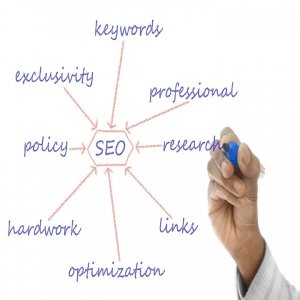
Use clean heading hierarchy: one H1 per page, H2s for major sections, and H3s for supporting points. Add descriptive alt text, structured data where relevant, and clear internal links so both users and crawlers can understand the relationships between pages.
Design for Clarity and Trust
Visitors decide quickly whether a site feels credible and easy to use. Visual hierarchy should direct attention to the most valuable information, while calls to action make the next step unmistakable
Every key page should answer three questions above the fold: What do you offer? Who is it for? What should the visitor do next? Use one primary call to action—such as “Book a free consultation,” “Get a quote,” or “Start your project”—and repeat it naturally throughout the page.
Trust signals materially affect conversion. Include client results, testimonials, case studies, recognisable logos, transparent contact details, and concise explanations of your process. Avoid vague claims; replace them with specific outcomes, timelines, and examples.
Create Content That Earns Visibility
In 2027, SEO is less about repeating keywords and more about becoming the clearest, most useful answer to a searcher’s question. Content should answer early, provide specific examples, acknowledge trade-offs, and be organised so users can scan it easily.
Write title tags of roughly 150–160 characters, include the primary keyword naturally, and communicate the benefit of clicking. Meta descriptions should not merely describe the page; they should give users a reason to choose it
For AI-driven search experiences, structure matters even more. Use direct answers, FAQs, definitions, comparison tables, and well-labelled sections. This helps both traditional search engines and generative engines interpret, summarise, and cite your expertise.
Turn Traffic Into Leads
Rankings create opportunity; conversion design turns that opportunity into revenue. Track enquiries, form submissions, calls, bookings, sign-ups, and sales attributed to organic search not rankings alone.
Offer a lower-commitment next step for visitors who are still researching, such as a checklist, pricing guide, audit, or newsletter. Then use a stronger call to action for visitors who are ready to engage.
Test one variable at a time: headline clarity, form length, CTA wording, trust elements, and page layout. Small improvements in conversion rate can deliver more business value than a small improvement in rankings.
Follow a Practical Rollout
A sustainable annual approach keeps SEO and design aligned:
- Q1: Audit technical health, analytics, keyword opportunities, and conversion barriers.
- Q2: Rebuild or improve priority service pages and publish pillar content.
- Q3: Add supporting articles, earn relevant links and mentions, and refresh declining pages.
- Q4: Review organic leads, conversions, and page performance; merge or prune weak content.
SEO results rarely appear overnight. New sites may take weeks to be crawled and stabilise in rankings, while broader SEO gains often develop over several months.
The 2027 Standard
The winning formula is simple: make the site easy for search engines to understand, easy for people to use, and easy for prospects to trust. Build around real search intent, remove friction from every page, measure business outcomes, and continuously improve based on evidence. That is how a website becomes both a ranking asset and a conversion engine.
Web Design And SEO Services UK expert and experience company, UK Affordable WordPress Web Designs, Web Designer, website Developers, SEO digital marketing Service Company, Expert Marketing Agency, E-commerce website design and developer Near me AND UK Affordable WordPress Web Designs, Web Designer, website Developers, SEO digital marketing Service Company, Expert Marketing Agency, E-commerce website design and developer Near me
Author Bio
Article Comments
No Comments!
At present there are zero published comments on this article.
Similar Articles
Search Pages
Article Categories
There are zero sub-categories in this parent category.
There are zero sub-categories in this parent category.